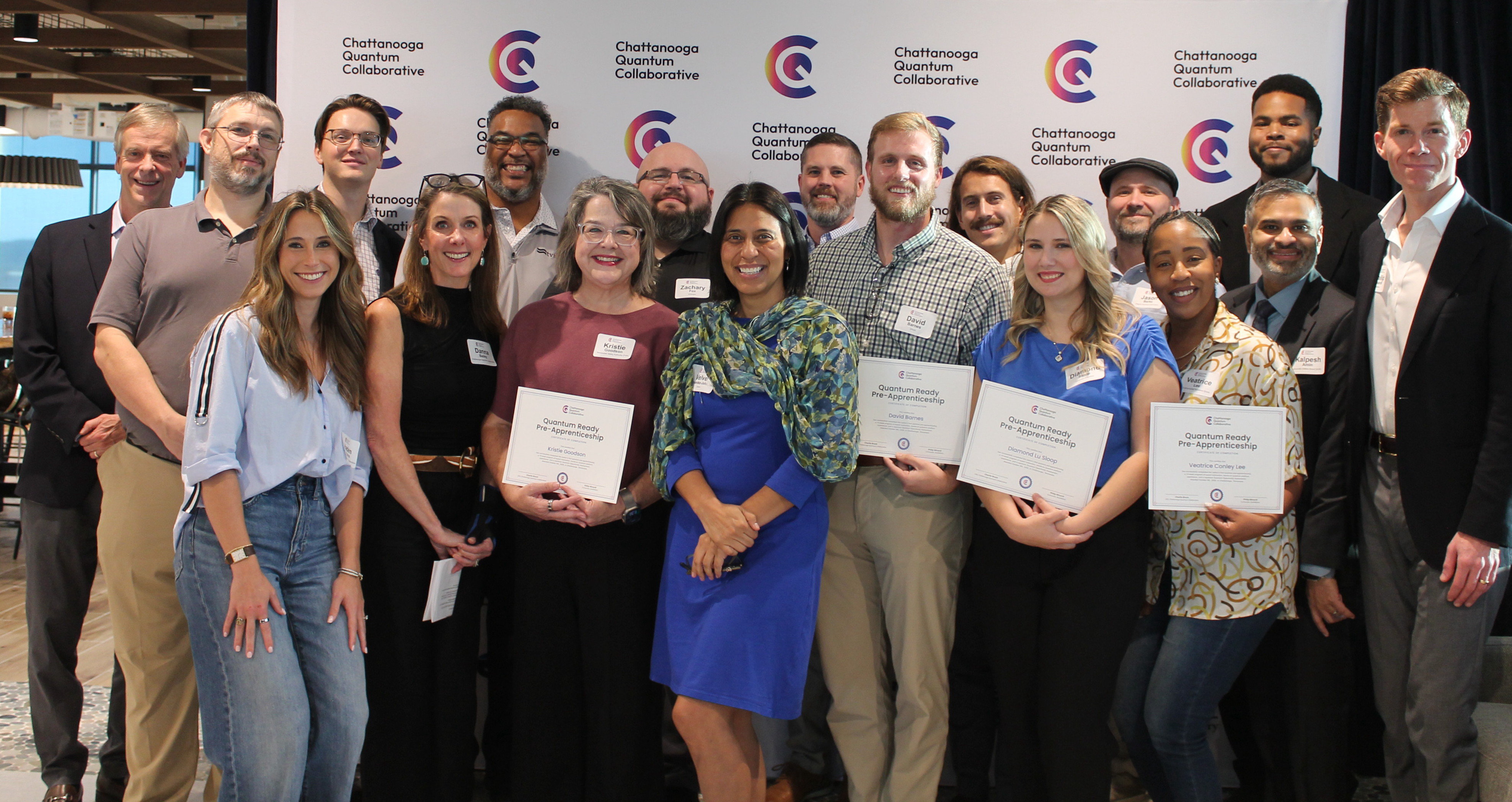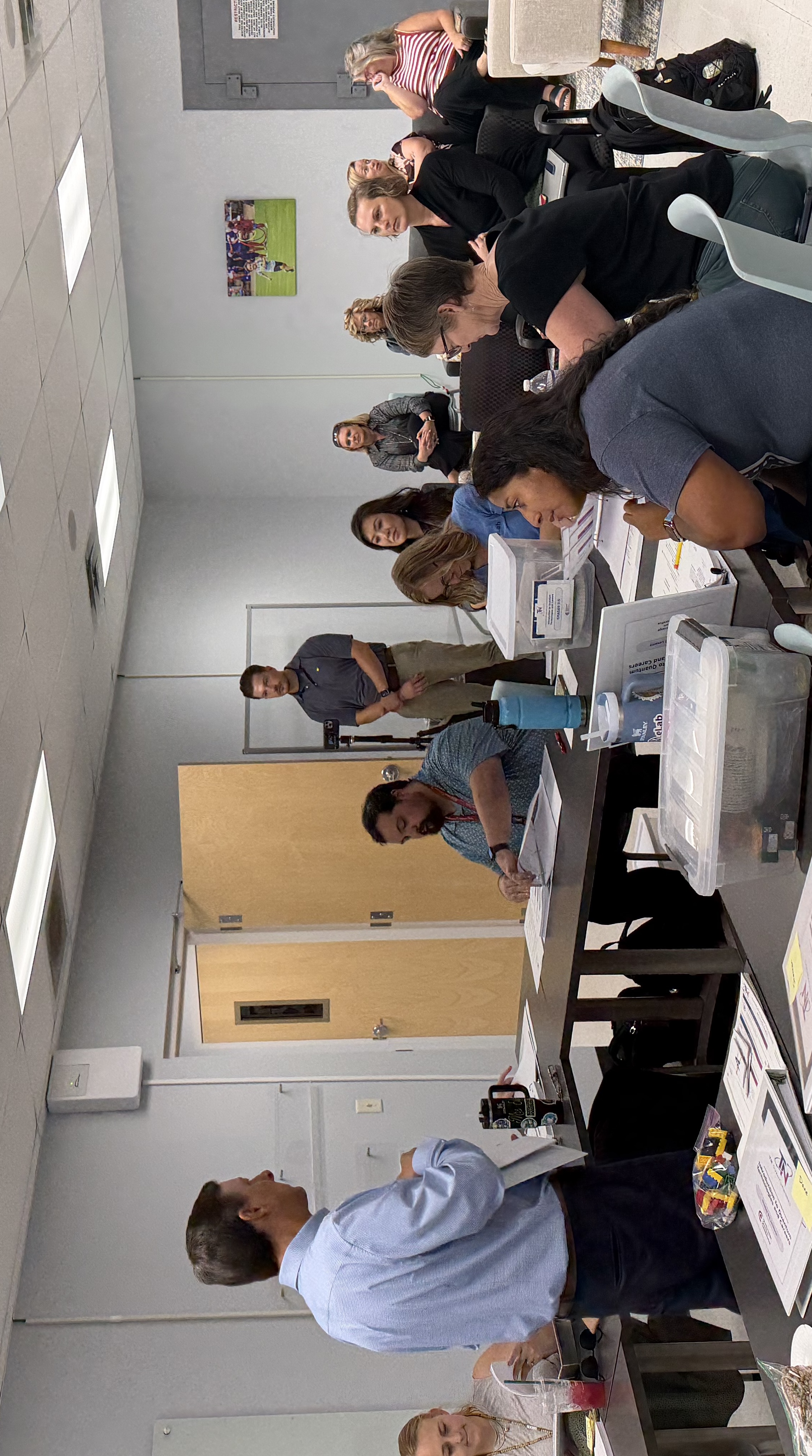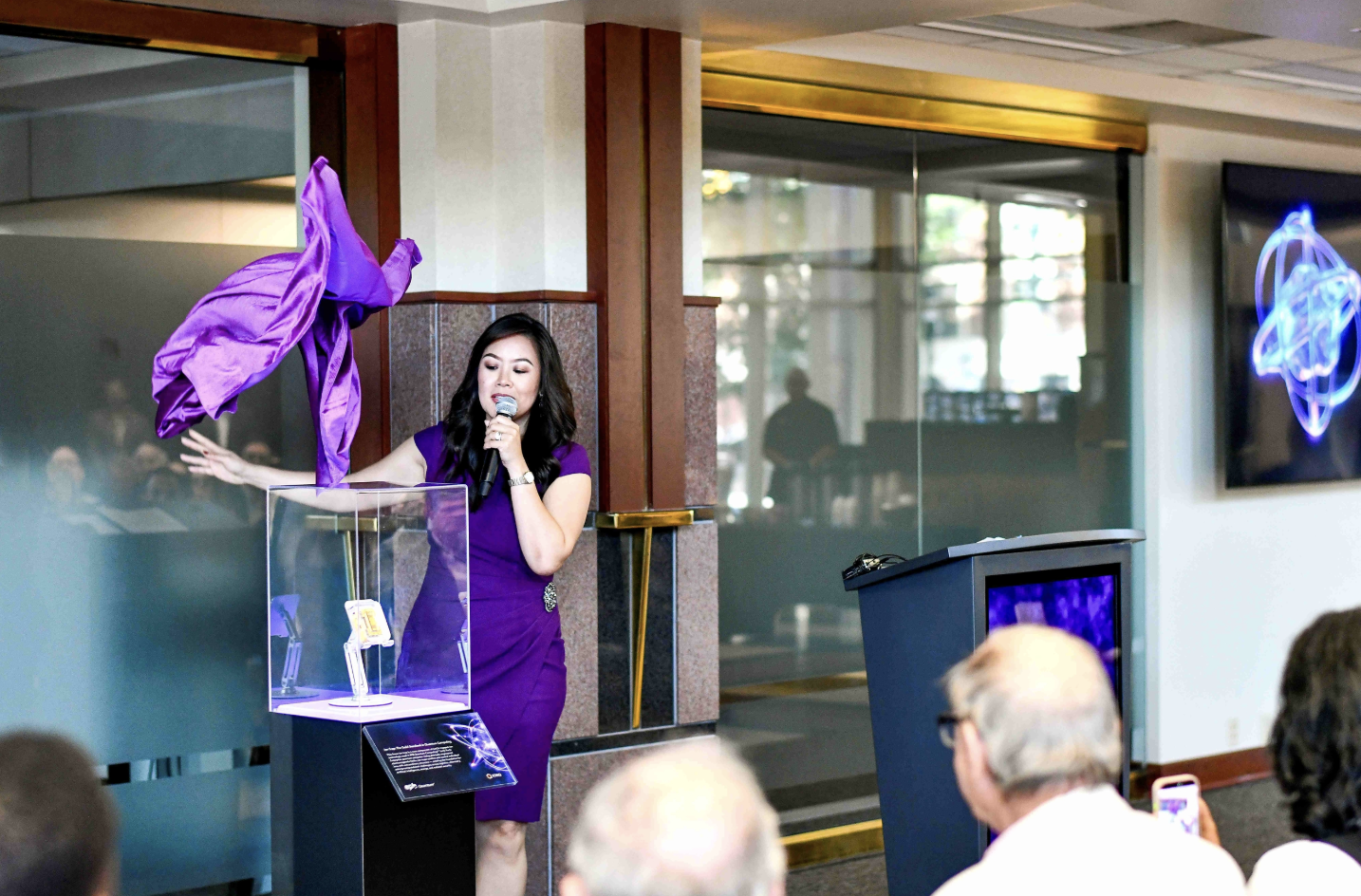
Teams from six universities took top prizes at the 36-hour, in-person competition presented by the Chattanooga Quantum Collaborative and CO.LAB
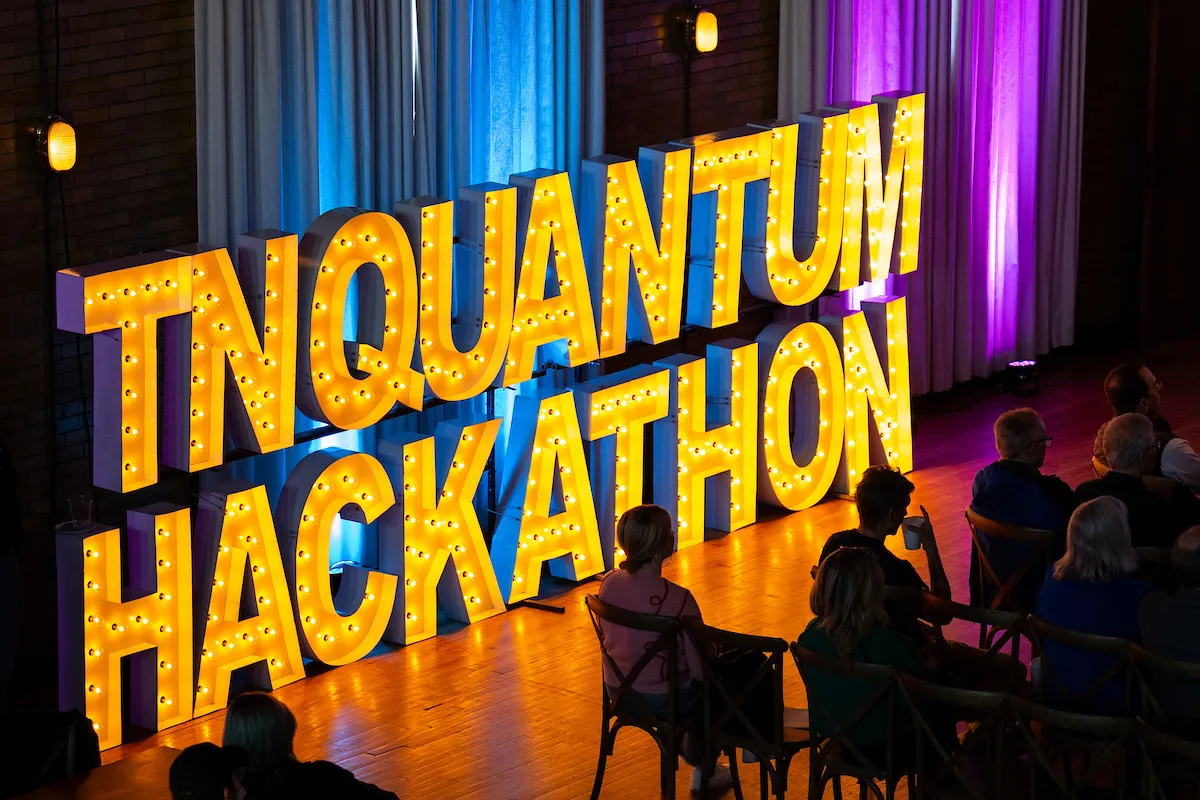
CHATTANOOGA, Tenn. (Nov. 18, 2026) – A team of students from Tennessee State University and Vanderbilt University took first place and a $2,500 prize at the Tennessee Quantum Hackathon, a 36-hour, in-person competition that challenged college students to use quantum technology to solve real problems facing the electric grid. The Chattanooga Quantum Collaborative (CQC) and CO.LAB presented the event Nov. 13-15 on the campus of the University of Tennessee at Chattanooga (UTC).
Most competitors had little or no quantum experience when they arrived. Students didn't need a quantum background to apply, and among those who reported their experience, 87% described themselves as beginners or brand new to quantum. Only two were physics majors; most studied computer science, cybersecurity or engineering. By Sunday, at least four of the six finalist teams had run a portion of their work on real quantum computing resources.
Nearly 60 undergraduates from 13 colleges and universities across Tennessee and the Southeast competed onsite on 12 teams, using the qBraid quantum computing platform. Teams worked side by side at UTC throughout the weekend, and several students skipped the hotel to stay at the venue overnight. Each team chose one of three tracks built around real challenges facing the electric grid:
- Secure the Grid: Utilities rely on encrypted communications to run substations and control centers, but powerful quantum computers are expected to break much of today's encryption in the future. Teams explored how quantum technology can protect grid data now, before attackers can read what they intercept.
- Plan the Power: Every hour, a utility must decide which power plants to switch on to meet customer demand plus a safety margin. Teams tested how quantum and hybrid quantum-classical methods could find the lowest-cost schedule while keeping the lights on.
- Place Sensors on the Grid: Sensors that monitor the grid in real time can cost $40,000 to $180,000 each to install. Teams worked out how a utility can place the fewest sensors possible while still seeing every part of its system.
TVA developed the Plan the Power and Place Sensors on the Grid problem sets, and UTC developed the problem statement for Secure the Grid. Each provided sample data for teams to build and test their solutions.
On Sunday morning, a panel of judges from Quantinuum, IonQ, TVA, UTC, CQC and Glass Energy Company reviewed all 12 projects and named six finalist teams.. The finalists presented their solutions on stage at a closing celebration at The Landing in Chattanooga, where the audience voted to choose the three winning teams.
The Winners
First Place ($2,500): Qtopia (Secure the Grid track) Tyler Sanders of Tennessee State University and Ethan Kur, Ethan Chen and Asheb Ikram of Vanderbilt University designed an early-warning system that uses quantum key distribution to detect eavesdroppers on utility fiber networks and keep grid communications secure.
Second Place ($1,500): Quintessential Quantum Qubits (Plan the Power track) Triston Hauser of Austin Peay State University, Noah Ford and Finnegan Danger of East Tennessee State University, Gracie Crooks of UTC and Sujal Pokhrel of Vanderbilt University built a hybrid quantum-classical method for scheduling power plants. Tested against TVA's actual hourly demand, it came within 0.4% of the best possible plan.
Third Place ($500): Pyrrhic (Secure the Grid track) Raman Berwary of Middle Tennessee State University; Alexander Fogarty, Nicholas Harris and Matthew Crabbe of UTC; and Aruzhan Zhanybekkyzy of Vanderbilt University built a planning tool that helps utilities decide which fiber links to protect with quantum encryption when the budget can't cover them all.
Three more teams reached the finals: Qatalyst, with students from UTC, East Tennessee State University and Kennesaw State University; The Entanglers, with students from UTC, the University of Tennessee at Martin and Vanderbilt University; and Tiger Qubits, an all-electrical-engineering team from Tennessee State University. Students from The Citadel, the University of Tennessee, Knoxville, the University of Alabama in Huntsville, Alabama A&M University and Tennessee Technological University also competed.
“Spending 36 hours applying quantum technology to protect the power grid, alongside teammates from another university, showed me what this technology can really do and where I can fit in, said Tyler Sanders, a senior mechanical engineering and business student at Tennessee State University and member of the first-place Qtopia team. “Getting to represent my hometown and my university felt humbling and I feel like I got to be a part of history in real time.”
“Experiences like this show our students that the skills they build in our classrooms and labs carry over to real-world challenges,” said Dr. Shazzad Rassel, Department of Electrical and Computer Engineering at Tennessee State University. “I’m proud of how they collaborated, embraced this opportunity, and represented Tennessee State University at the hackathon.”
Real Grid Problems and Industry Partners
TVA, which sponsored the event and supplied problem statements, volunteers, mentors and judges, sees the hackathon as an early connection to the talent that will shape the future grid.
“A reliable, secure power grid depends on the people who will build the next generation of tools to improve reliability and security,” said KC Carnes, Vice President of Cybersecurity and Chief Information Security Officer at TVA. “This weekend, students worked on the same kinds of challenges our teams tackle every day, and they gave us an early look at the innovative talent that will help keep the Valley resilient and powered.”
CO.LAB brought its experience supporting entrepreneurs to the event, including a Saturday session on pitching projects.
“A hackathon builds the same skills a founder needs: framing a problem, building fast and pitching a solution people believe in,” said Bryan Barringer, Director of Programs at CO.LAB. “These students did all three with an emerging technology in 36 hours, working side by side, often with teammates from other campuses. That is exactly the kind of entrepreneurial energy we want to keep in Tennessee.”
“You don’t have to be a physicist to have a role in quantum, and this weekend proved it,” said Charlie Brock, CEO of the Chattanooga Quantum Collaborative. “Computer science, engineering and cybersecurity students who were new to quantum put real quantum computers to work on real grid problems.”
Partners and Support
UTC provided the primary venue and facilities throughout the weekend. TVA, Quantinuum, IonQ and Pinnacle Bank sponsored the event with financial support, EPB with in-kind support, and Launch Tennessee sponsored participants’ access to qBraid, which provided the quantum computing platform and technical facilitation throughout the weekend. This program was supported in part by the U.S. National Science Foundation under award No. 2534232, awarded to UTC, with EPB, CQC, and CO.LAB as subawardees.
Photos from the event are available here.
About the Chattanooga Quantum Collaborative
The Chattanooga Quantum Collaborative (CQC) is a nonprofit organization working to establish the Chattanooga and Tennessee region as a nationally recognized, thriving quantum cluster that drives long-term regional economic prosperity. CQC mobilizes regional partners to grow the quantum ecosystem, prepare talent at every level, and help local industry explore and adopt quantum technologies. Learn more at www.ChattanoogaQuantum.com.
About CO.LAB
The Company Lab (CO.LAB) is a place-based entrepreneurial support organization that helps entrepreneurs and early-stage companies advance and commercialize technologies in energy, mobility and quantum. Through accelerators, its CO.LAB Q quantum commercialization studio and partnerships with industry, research and government, CO.LAB connects founders to the infrastructure, customers and capital they need to grow. Learn more at www.thecompanylab.org
Media Contact:
Danna Bailey, Chattanooga Quantum Collaborative
Danna@ChattanoogaQuantum.com
423-802-9549