Learning Center
With quantum technologies having potential for advancements in topics ranging from cybersecurity to healthcare, Chattanooga and Hamilton County are getting ready for the future. Join us in learning more about this transformative technology by using a few of the learning activities we’ve brought together below with help from our friends at the Enterprise Center and the the Public Education Foundation, the Chicago Quantum Exchange, UTC and the National Q-12 Partnership.
Start anywhere. Stay as long as you like.
These modules are designed to make quantum science more approachable—whether you’re exploring a quick video or diving into a classroom-ready activity.
Downloadable Modules
Chattanooga & Hamilton County
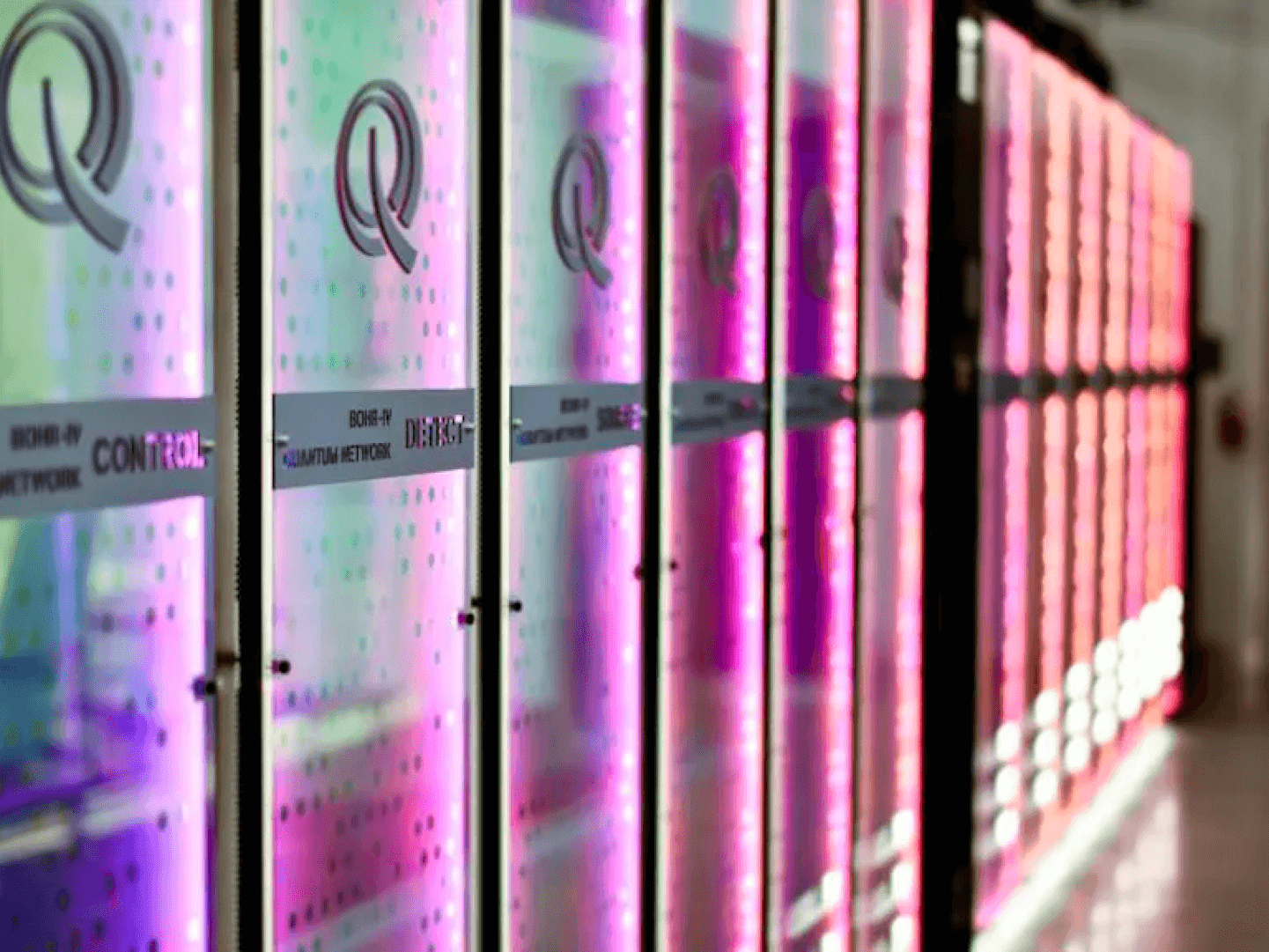
Quantum technologies are built on the unique behaviors of particles at the smallest scales, where they can exist in multiple states at once and remain connected across distances. As investment and development accelerate, regions like Chattanooga are building the infrastructure, talent, and partnerships needed to participate in this emerging field and apply it to real-world challenges.


Provided by Tech Goes Home and the Enterprise Center, this lesson introduces students to quantum science, quantum scientists, and their benefit to society. It includes introductory elements of three of the six Tennessee K-8 Science Standard core principles: Foundational Concepts, Data and Analysis, and Impacts of Computing. This module is intended to be instructor-led and can be completed in 1-1 ½ hours.

Provided by Tech Goes Home and the Enterprise Center, this lesson introduces students to quantum computing and its benefits to society, including fun exercises in code cracking and building your own Thaumatrope! It includes introductory elements of five of the six Tennessee K-8 Science Standard core principles: Foundational Concepts, Algorithmic Thinking, Programming Concepts, Data and Analysis, and Impacts of Computing. This module is intended to be instructor-led and can be completed in 1-1 ½ hours.

Provided by Tech Goes Home and the Enterprise Center, this lesson introduces elementary students to quantum computing, how it works, and how it differs from classical computing. It includes introductory elements of five of the six Tennessee K-8 Science Standard core principles: Foundational Concepts, Algorithmic Thinking, Programming Concepts, Data and Analysis, and Impacts of Computing. This module is intended to be instructor-led and can be completed in 1 ½-2 hours.

Designed by the Public Education Foundation (PEF), this lesson teaches students to train a computer to use a webcam to detect and respond to different emotions using machine learning (Google Teachable Machine) while getting first-hand experience by coding a MicroBit to handle the algorithm using the Vittascience Adacraft Platform. As they train a digital system to interact intelligently with the real world, they will experience the limitations of classical computing and learn about the powerful capabilities quantum computing can unlock.

Object detection and motion tracking currently depend on sophisticated algorithms and equipment. As quantum computing further develops and expands the capacity of machine learning, these systems will become increasingly accurate. In this activity, designed by the Public Education Foundation (PEF), students will build a system that, students will build a system that uses a webcam and a 3D printed flower to allow a user to control the color of the flower (LED) wirelessly through a skeletal tracking program they create using A.I.
Video Modules
We're pleased to share the Quick Quantum for High Schoolers video series from our friends at the Chicago Quantum Exchange. This five-video series from our friends at the Chicago Quantum Exchange. This YouTube-based resource breaks down core quantum ideas like qubits, superposition, and entanglement into short videos that introduce you to fundamental concepts quickly.


In partnership with Chattanooga State, Dr. Duncan Earl, a nationally recognized pioneer in the field of practical quantum applications, introduces ideas about how life might be different in the coming Quantum Age.

What is quantum and why does it matter? Our friends at the National Q-12 Education Partnership offer an introduction to quantum and how the science is already enriching our lives.

Learn how EPB Quantum Network in Chattanooga, powered by Qubitekk, accelerates quantum tech development by providing a real-world fiber optic network for companies and researchers to run and validate quantum equipment and applications.

Hear Dr. James Troupe speaking to an audience at UTC about quantum networking, some current practical applications, and some possible future use cases.

Dr. Tian Li, University of Tennessee at Chattanooga, provides an introduction to quantum sensing and shares information about how this emerging technology could make a real difference in people’s lives.
Enter this week’s drawing!