A prominent quantum computing executive is raising the alarm on the need for the private, public, and academic sectors to step up their efforts to identify and prepare thousands of people to support the next big technology revolution. If the US fails to act with sufficient momentum, global economic competitors may take a lead position in the rapidly emerging quantum industry. This risk could have severe long-term consequences in every part of the US economy. It’s a clear warning that demands immediate attention.
The Quantum Computing Industry Is Rising
Classical computing, the technology that has served us for many decades and powers smartphones, laptops, and effectively anything with a chip inside it, has been nothing short of revolutionary. It’s reliable and predictable science based on the manipulation of electricity and fortunately year after year so far, engineers have been able to improve the technology and speed up the rate of information processing.
At the same time, arising gradually in research labs over several decades has been the promise of a completely different approach to computation based on quantum physics. Scientists discovered that the unusual behavior of particles could provide the basis for remarkably fast algorithmic processing. In other words, they could see a future where quantum computing would leave classical computing in the dust relative to speed and capability.
It’s still early, but using quantum, for example, in optimization problems such as routing and scheduling, shows promise in saving time, money, and energy.
The tantalizing prospect of computers that could potentially solve and complete specific types of tasks hundreds, thousands, and perhaps millions of times faster than traditional computers, has meant increasing levels of investment and in recent years, breakthroughs in the necessary enabling technology.
Unsurprisingly, quantum computing also has the attention of governments around the world, and the US federal government has made it a priority over several presidencies. Today, it joins artificial intelligence as a strategic priority of the current US administration.
All the predictable players from Microsoft to IBM are deep in research and development, as are a large number of startups in the growing quantum ecosystem. As an example, Google announced a major processing milestone this year that demonstrated their quantum hardware and software outperforming classical supercomputers for the same specific tasks.
The quantum industry is developing rapidly, but major challenges in the requisite science continue to exist and full-blown commercialization is still a few years away.
The Quantum Computing Industry Needs A Workforce
Zachary Yerushalmi has a front seat to the quantum revolution and is now sounding the alarm on the need to urgently identify and prepare thousands of people to join the quantum workforce over the next few years.

Yerushalmi is the Chief Executive Officer and co-founder of the Colorado-based nonprofit Elevate Quantum. Founded in 2023 and funded with significant federal and state investment, the organization was created to bring together over a hundred quantum-related organizations across Colorado, Wyoming, and New Mexico, and support the growth and development of the quantum industry not just in the Rocky Mountain West, but for the entire country. While it’s true that innovation can always emerge organically, there’s a long successful history of government partnering with private industry to accelerate efforts of national importance.
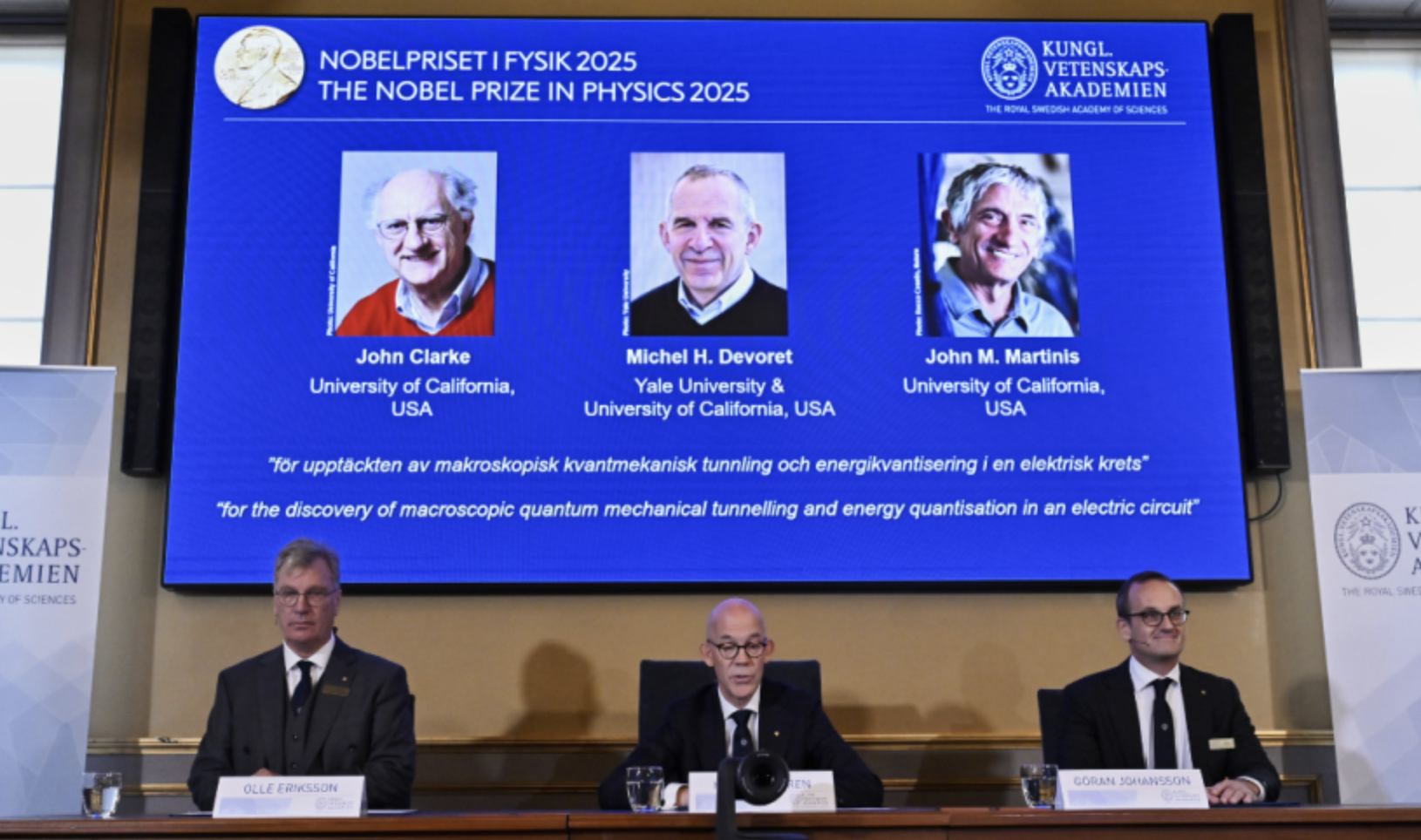
At first it may surprise many that this region is a leader in the quantum computing revolution rather than perhaps the more obvious California-based Silicon Valley. The reason is clear. The US Commerce Department’s National Institute of Standards and Technology (NIST) research hub in Colorado has been a primary site for quantum research since the 1950s and became a formal quantum center in 2000. Impressively, the hub has produced four Nobel Prize winners. This focus on quantum research attracted the best and brightest in the field, and just like Silicon Valley did as the home of semiconductors, Colorado and New Mexico generated local ecosystems of supporting quantum-related industries like fabs (short for fabrication facilities where quantum hardware is constructed) and startups. Today, the area has over 3000 people working in the industry, which according to Yerushalmi, is well over 50 times greater than any other region in the country.
As breakthroughs and commercialization opportunities unfold and grow, Yerushalmi is seeing firsthand an unmet demand for the necessary workforce that the industry requires. He sees a big part of his role now to raise awareness at the national level and motivate the development of the right skills to build a dominant US quantum industry. Failing to do that means potentially yielding the lead to another global competitor.
What Kind Of Workforce Is Required For The Quantum Computing Industry?
In the early years of discovery, most new technologies are staffed by a small set of academics, scientists, and engineers. But as research confidence increases and the economic opportunities become more obvious, the field grows and attracts investors, entrepreneurs, programmers, manufacturers, and administrative support. The semiconductor and aviation industries are examples of this pattern.
The quantum industry has historically been intensely science-based, with many participants requiring an advanced degree. The physics, chemistry, and mathematics involved, for example, has demanded it.
Now, the landscape is evolving rapidly. While the deep science requirement continues and demand for quantum-related graduate degrees remains strong, the need for blue collar talent is rapidly rising. Moving from a purely science-based effort to supporting a potentially multi-trillion-dollar industry requires a massive workforce to operationalize it. There are software requirements for sure, but hardware manufacturing is a big part of the quantum future.
Yerushalmi says that eighty percent of the workforce needed for the commercialization of the quantum industry doesn’t necessarily require an advanced degree, and many won’t require a degree at all. What’s needed are blue collar and technical trades in areas such as assembly, industrial refrigeration, electronics and electrical, facilities, packaging, and field service and maintenance. Over the next several years, the numbers of people required for these roles in the US will be in the tens of thousands.
Is there a plan to train and onboard this talent in a compressed timeline, and what role can the private, public, and academic sectors play? In addition, how can potential employees be made aware of this high demand area and the jobs required?
Answering questions like these and actioning them is the workforce challenge that lies before leaders right now.
Enabling The Quantum Computing Workforce
Yerushalmi is impressed with the level of focus and effort the federal government has placed on supporting a US-dominated quantum industry. In addition to the economic opportunities, the current administration views it as a national security priority.
There’s a role here for every part of society. The quantum industry has the potential to generate a significant number of jobs and economic growth in communities across the country.
In addition, all types of organizations need to begin to prepare for a quantum future. That may mean learning about the technology, its benefits, and what role it could play in how an organization operates and the products and services it delivers. It may not be obvious yet but increasing organizational awareness does have advantages.
One area, the convergence of quantum computing and artificial intelligence is worth appreciating sooner than later.
Like so many new technologies, the killer apps for quantum will be obvious when they emerge.
Finally, a future of quantum computers also means learning about the risks they pose to existing cryptography; the cybersecurity that protects your digital infrastructure, applications, and data. If you’re a C-suite executive, ask your IT team what this means and what the risk may look like in your industry. Eventually, you may need talent to tackle this issue too.
While challenges exist, it’s refreshing to know that quantum computing, a massive new industry, is emerging that will provide a vast array of opportunities for businesses, cities, entrepreneurs, state and federal government, and many others.
Let’s make sure we don’t miss the boat.












.jpg)