


Whether you’ve been with us from the start or are just joining in, we’re glad you’re here.
There’s real energy building around quantum - and we’re starting to see it take shape across our region in ways that are both practical and promising.
In this issue, we highlight some of that momentum:
- Early signs of industry growth and investment
- How quantum could transform transportation and logistics
- Workforce and education efforts gaining traction across Tennessee
- Updates from partners like UTC, ORNL, and others across the Southeast
At CQC, we’re focused on connecting the dots between quantum technologies and the communities they’ll serve, between global breakthroughs and regional opportunity. Thanks for being part of the adventure!
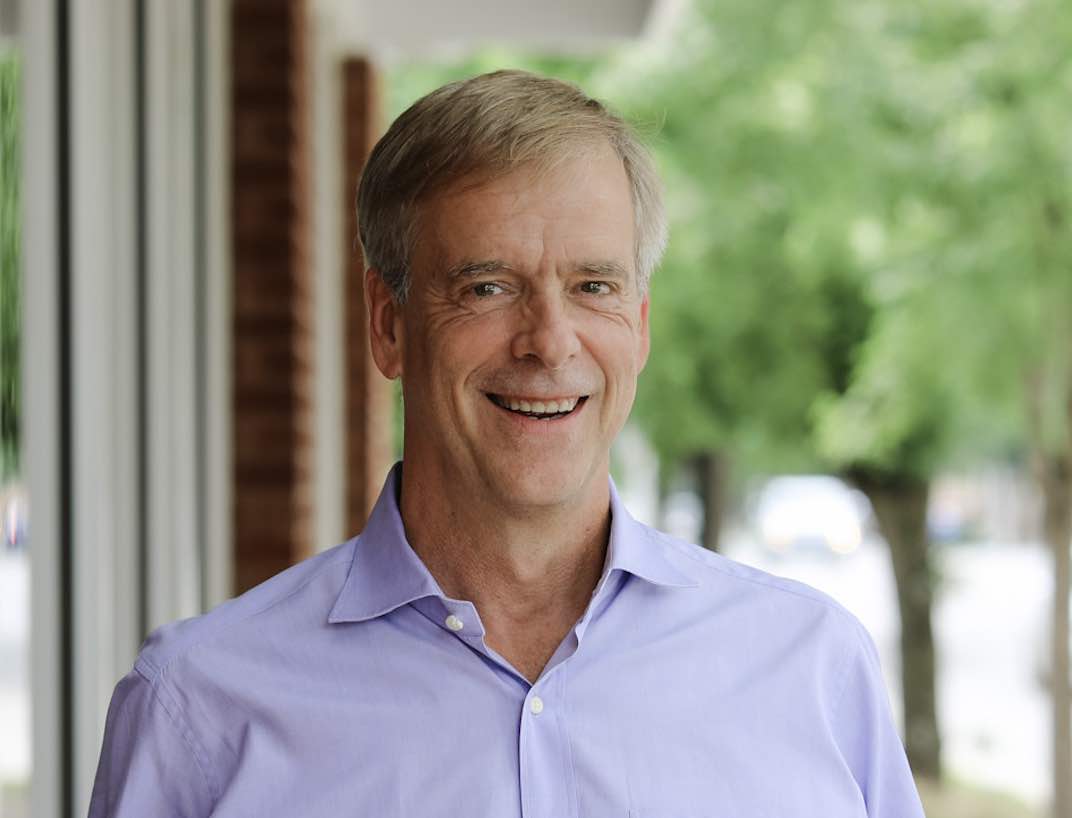
Charlie Brock
CEO, Chattanooga Quantum Collaborative
Quantum Momentum Is Building - Faster Than Expected
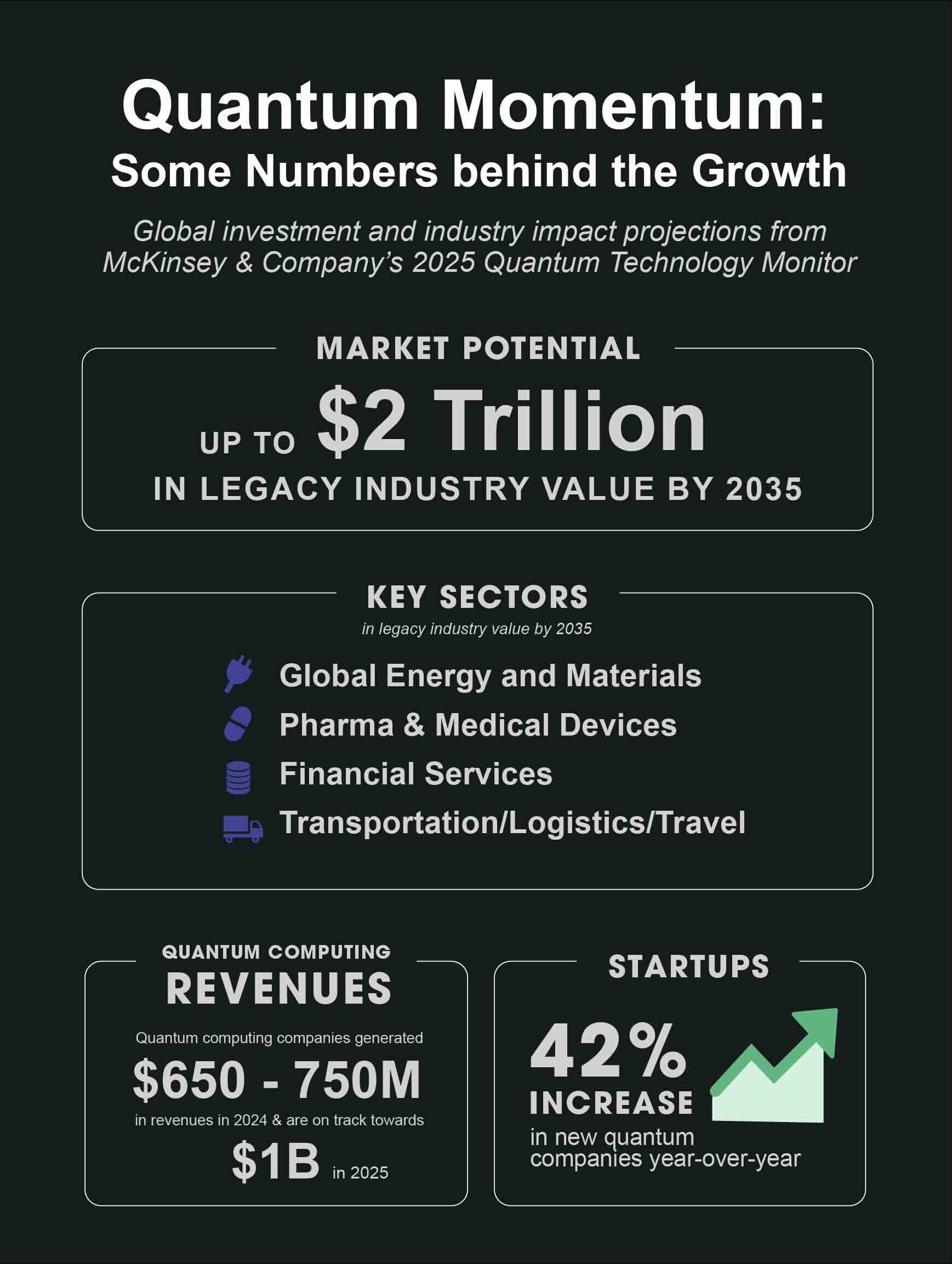
If it feels like momentum around quantum is picking up, you're not imagining it. According to McKinsey’s 2025 Quantum Technology Monitor, the industry isn’t just moving forward—it’s accelerating.
In the past year, investment, scientific progress, and even early revenue have outpaced expectations:
- Private investment in quantum startups rose nearly 50% year-over-year to $2 billion.
- Public investment surged globally, with countries like Japan making a multi-billion-dollar bet and additional U.S. states making meaningful investments.
- Revenue from quantum computing companies reached an estimated $650–$750 million in 2024 and is projected to exceed $1 billion this year.
- The market size for quantum communications, technologies that allow the secure transfer of quantum information, was estimated at $1.2 billion in 2024, and McKinsey estimates that it will reach $10.5 billion to $14.9 billion by 2035.
- All told, McKinsey found that by 2035, quantum computing could be worth $28 billion to $72 billion, quantum communication could be worth $11 billion to $15 billion, and quantum sensing could be worth $7 billion to $10 billion—for a total of as much as $97 billion by 2035. They also note that this growth shows no signs of slowing. They predict that by 2040, the total Quantum Technology market could reach $198 billion.
Meanwhile, breakthroughs in error correction and scalable qubits are chipping away at technical barriers, bringing practical quantum applications closer to reality.
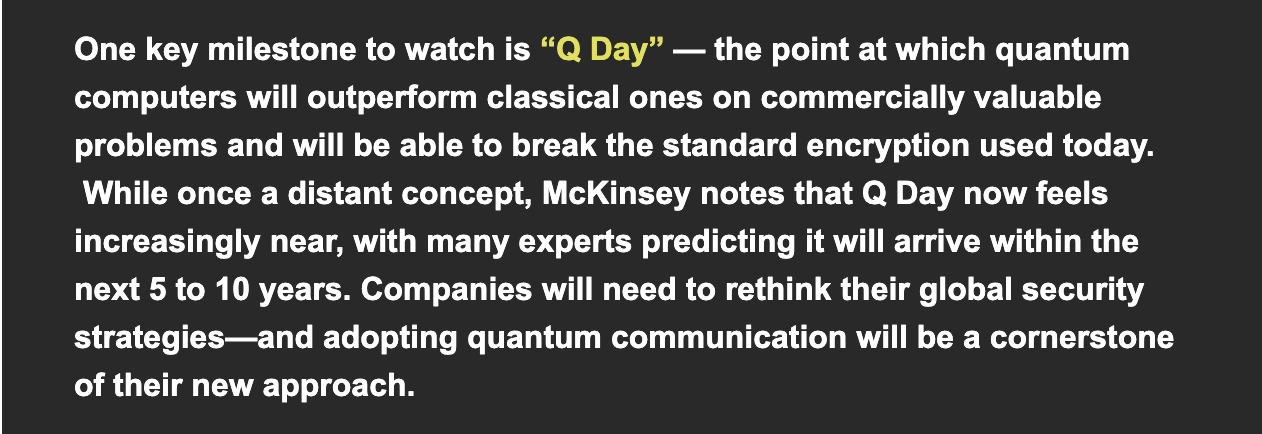
n short, quantum’s timeline is speeding up. While there’s still complexity to navigate, the future is approaching faster than expected—and those paying attention today are better positioned to lead tomorrow.
Want to read about more quantum progress in terms of acquisitions and tech breakthroughs? Check out our blog post on recent announcements here: Acquisitions and Tech Breakthroughs
Q&A with Shaun Gleason, Oak Ridge National Laboratory
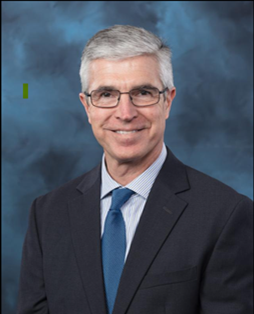
Each issue, we sit down with a leader from one of our member organizations to get their take on where quantum is headed—and how it connects to our region’s future.
This time, we’re talking with Dr. Shaun Gleason, Director of Partnerships at Oak Ridge National Laboratory (ORNL). From national security to energy innovation, Shaun is focused on building collaborations that accelerate the transition from research to deployment. We spoke with him about why ORNL joined the Chattanooga Quantum Collaborative, the convergence of quantum and nuclear energy, and even his nostalgic affection for “old school tech”, Fortran.
CQC: ORNL is a founding member of the Chattanooga Quantum Collaborative (thank you!) What drew the lab to get involved, and what potential did you see in Chattanooga’s efforts around quantum?
SG: We’ve been impressed by Chattanooga’s forward-leaning approach, especially through EPB, which has made bold investments in fiber and quantum infrastructure. Chattanooga is the kind of place where public-private partnerships can thrive. There’s also growing momentum through partners like TVA and the University of Tennessee at Chattanooga (UTC), which is expanding its own quantum programs. We see real potential for regional collaboration that moves beyond theory and into deployment.
CQC: ORNL is home to Frontier, one of the world’s most powerful supercomputers. How do classical supercomputers and quantum devices complement each other?
SG: The future of computing is heterogeneous. That means different processors—CPUs, GPUs, and eventually quantum processing units, or QPUs—working together, each solving the part of the problem they’re best suited for. Frontier is a great example of that model today leveraging a combination of CPUs and GPUs. Eventually, quantum will become another piece of that heterogeneous computing puzzle, handling problems classical computers can’t tackle alone.
CQC: ORNL plays a major role in nuclear energy research. How might quantum accelerate progress in that space?
SG:First, security around nuclear facilities is paramount, and quantum offers potential advances in information and infrastructure protection that are immune from classical cyber-attacks. Second, quantum computing is capable of simulating atomic-level interactions at a scale and level of detail that are difficult or impossible to simulate today. That’s especially promising for materials discovery—identifying new materials, for example, that can survive in the extreme conditions found in nuclear fission and fusion environments. Both aspects—security and materials innovation—are critical as nuclear energy evolves.
Even outside of nuclear, there’s a variety of opportunities to be excited about relative to quantum and energy, including a topic I know EPB is also very interested in—how can quantum optimization help more efficiently optimize the delivery of a variety of energy resources on the grid to its customers.

CQC: ORNL has a reputation as a bit mysterious—maybe even walled off from the outside world. What’s right or wrong about that perception?
SG: I understand why that perception exists but it’s not totally accurate anymore. ORNL was born out of the Manhattan Project and still conducts important national security work. That history, and the need to protect classified research, contributes to the sense of separation. But many people do not know that today, most of our research is considered “open science,” meaning it’s unclassified and publicly accessible. We’re a multidisciplinary science lab, so we work across a variety of areas such as high-performance computing, neutron science, nuclear energy, biology, manufacturing, and national security, and a significant portion of what we do across all those scientific disciplines involves open collaboration with universities and industry as well as federal agencies.
CQC: For students or early-career professionals curious about quantum, what advice would you give?
SG: Look for programs that integrate quantum physics, artificial intelligence, computer science, and engineering. Quantum information science is inherently interdisciplinary, so the more you can build bridges between those technical fields, the better. UTC, for example, is doing a great job of bringing those elements together in some of its academic programs.
CQC: What’s a piece of ‘old-school’ tech you miss—or hope never to see again?
SG: Honestly, I have a soft spot for Fortran (short for Formula Translation). It was my first exposure to computer programming, and I learned a lot from it. It’s still kicking around in some corners of science and engineering. Maybe I’m nostalgic, but it gave me a strong foundation for my many years of writing software in several other languages for my own research.
CQC: If you had a magic wand to solve one challenge in emerging technology, what would it be?
SG: I’d wave it over the gap between basic research and deployment. We need more seamless, fast, and agile public-private partnerships to move revolutionary ideas and discoveries out of the lab and into the real world where they will have meaningful, positive impact on U.S. businesses, the economic security of the U.S., and the lives of people. That’s especially true for quantum, AI, and other emerging technologies that are advancing rapidly.
Member News: Brick by Quantum Brick
Foundations are forming. Collaborations are growing. Here’s how our members are helping this region take shape as a quantum hub.
UTC Highlights
Congratulations to Dr. Lori Mann Bruce, newly named Chancellor of the University of Tennessee at Chattanooga! With a strong track record in expanding research funding and academic programs, she’s well-positioned to support UTC’s growing quantum efforts.

UTC also secured a $447K NSF grant to advance metro-scale quantum sensing using Chattanooga’s EPB fiber network. Led by Dr. Tian Li and Dr. Don Reising, the project uses deep learning to detect environmental changes in urban air quality and infrastructure with unprecedented precision.
In addition, the university received $500K in state funding for smart city initiatives—including AI-powered traffic prediction and smart crosswalks—creating opportunities for quantum-enabled sensing within broader mobility efforts.
UTC researchers are also publishing cutting-edge work, including high-speed entangled-photon distribution with >99% fidelity across fiber—demonstrating the strength of Chattanooga’s testbed capabilities.
EPB Updates
EPB has added three new experts to support the growth of EPB Quantum℠: Quantum Physicist Dr. Alexander Miloshevsky, Quantum Systems Engineer Jackson Ricketts, and Manager of Quantum Systems Patrick Swingle. Their combined experience in quantum research, engineering, and network operations strengthens the region’s position as an emerging leader in real-world quantum innovation.
Learn more here →

ORNL Updates
Oak Ridge National Lab unveiled a new photon-based quantum gate that manipulates polarization and frequency in a single photon—enhancing the reliability of quantum communication systems. Learn more here →
ORNL also continues integrating quantum experiments with EPB’s quantum network and the Frontier supercomputer, reinforcing regional strengths in classical–quantum system development. Learn more here →
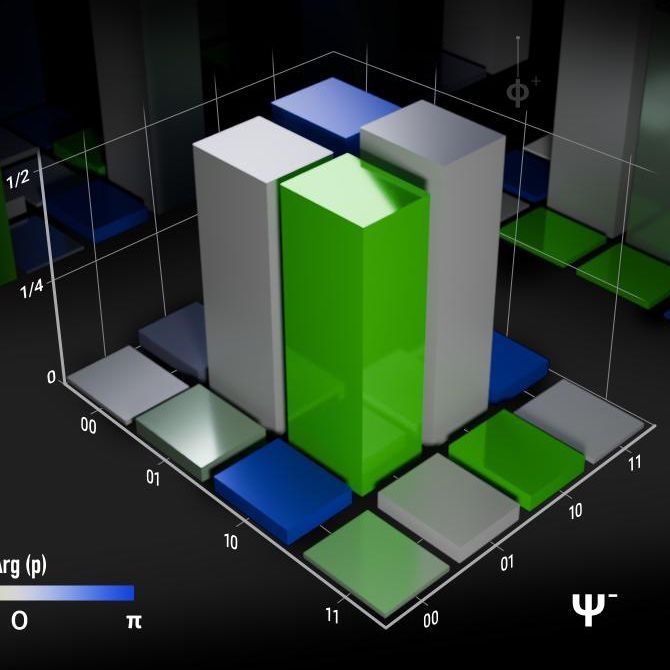
Building a Quantum-Ready Workforce in Tennessee
Quantum technology is still emerging—but across Tennessee, efforts to build a quantum-ready workforce are already underway.
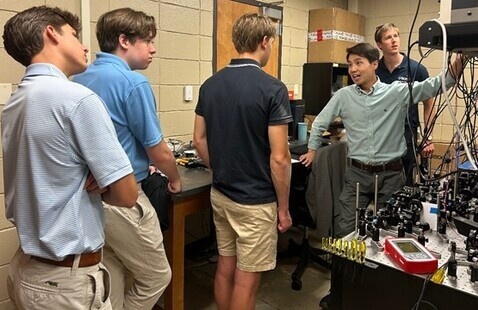
In May, the University of Tennessee at Chattanooga hosted its first Quantum Summer Camp, giving high school students hands-on exposure to quantum concepts—an encouraging step toward preparing future talent.
At the national level, Oak Ridge National Lab continued its leadership with the Quantum Science Center Summer School, offering training in areas like quantum sensing and materials. And in Middle Tennessee, MTSU’s TN-QuMAT program is connecting institutions like Tennessee State, Fisk, and ORNL to grow a more inclusive quantum talent pipeline.
No one has all the answers yet—but these efforts reflect growing momentum. As interest in quantum expands, so does the network of educators and researchers working to ensure Tennessee keeps pace.
Quantum Connections: Engaging with Our Community
From speaking engagements to roundtable discussions, CQC continues to explore where quantum fits into our region’s economic future—and how we can connect with others doing the same.
Recently, we joined Quantum Immersion Day at ORNL, co-hosted by IonQ, where industry and academic partners explored real-world quantum applications.
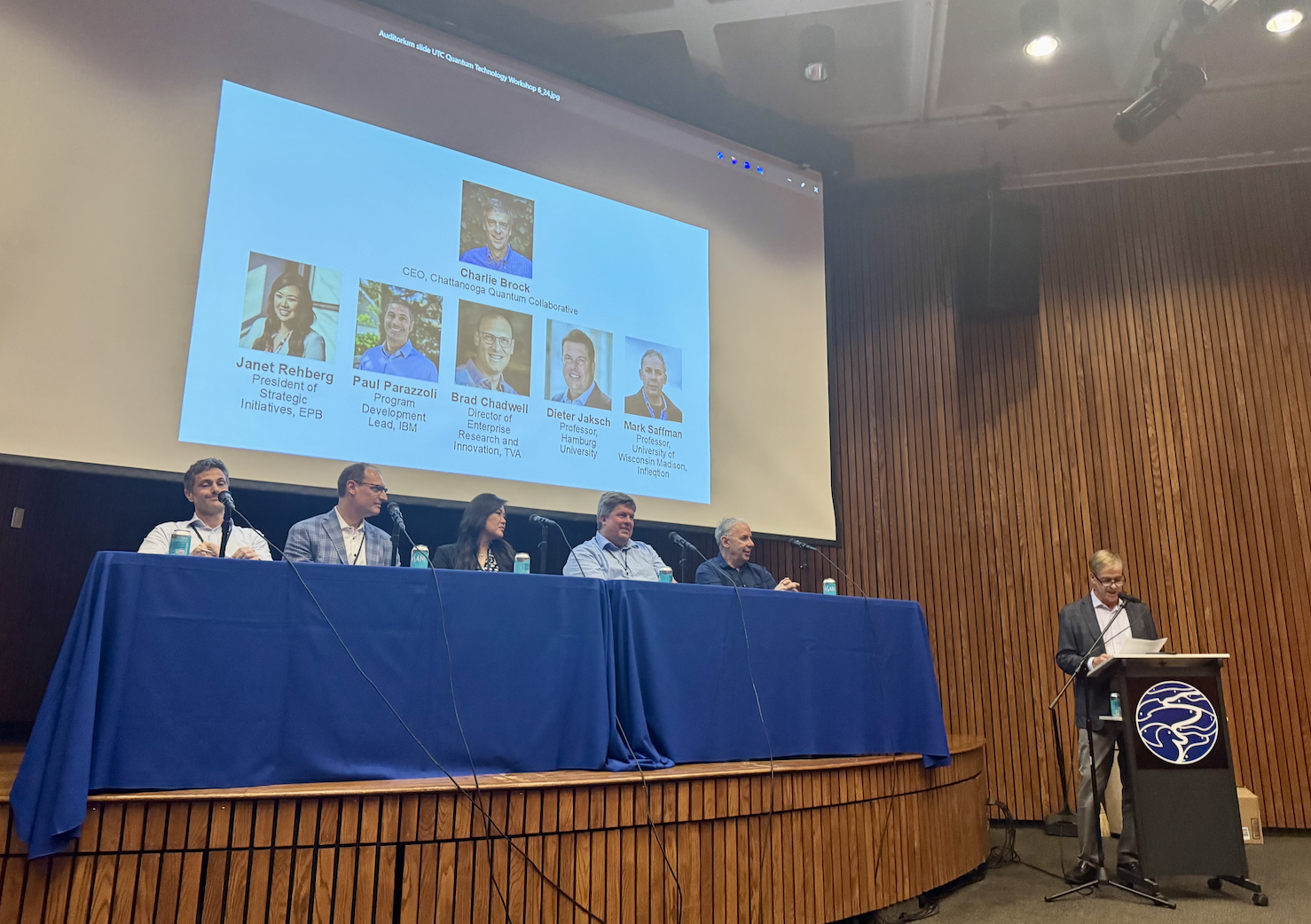
In June, CEO Charlie Brock moderated a panel at the UTC Quantum Technology Workshop, featuring voices from IBM, ORNL, EPB, and others on advancing quantum in legacy industries.
We also joined the Tennessee Business Roundtable, hearing from business leaders on workforce and innovation—reminders that quantum’s growth depends on broader economic strategies.
Upcoming Events:
IEEE Quantum Week
Albuquerque, Aug 31–Sept 5
Global forum for practitioners and curious newcomers alike. Learn more here →
3686
Nashville, TN Sept 8–10
CQC will join ORNL, COLAB and others for a Partner Popup to talk about quantum in Tennessee + how industry, startups and researchers can work together + what Tennessee still needs. Learn more or register here →
Quantum World Congress
Tysons, VA, Sept 16–18
Covers the latest in quantum tech, networking, and learning. Learn more here →
Chattanooga Connect
Chattanooga, October 6-8
Explores advances and potential in digital infrastructure, quantum, AI and transportation. Learn more here →
Q+AI
NYC, Oct 19–21
Explores where quantum and AI converge across sectors. Learn more here →
Southeastern Quantum Conference
Knoxville, October 27-29
Hosted by ORNL, this conference will provide a platform for collaboration and knowledge exchange that advances national strategic priorities in quantum innovation, security and computing. Learn more here →
Tennessee Governor’s Conference
Murfreesboro, November 4-5
This conference brings together state and local leaders, economic developers, and business professionals to explore strategies for growing Tennessee’s economy and strengthening communities. Learn more here →
Attending any of these events? Let us know—we’re happy to connect you with others.
Industry Spotlight: Quantum’s Potential in Transportation and Logistics
In this issue, we’re focusing on transportation and logistics - industries that keep our region moving and could see major gains from quantum technology. From optimizing freight routes to coordinating autonomous vehicles, quantum is opening new possibilities for solving some of the sector’s toughest challenges.

And there’s real value to be gained from transportation and logistics companies that take early advantage of the technology. In fact, in its 2025 Quantum Technology Monitor, McKinsey names travel, transport, and logistics among the four sectors with the most to gain from quantum over the next decade, estimating a global sector impact of $200–$500 billion by 2035.
What could that look like? Here are a few promising use cases:
- Smarter vehicle routing: Optimize fleet schedules using real-time traffic, weather, and constraints too complex for classical computing.
- Warehouse and supply chain efficiency: Enhance layout planning, inventory flow, and just-in-time logistics.
- Port and terminal operations: Improve container stacking, loading/unloading, and customs scheduling.
- Air-traffic scheduling: Reduce delays and fuel use through better routing and timing.
- Autonomous systems coordination: Support faster, safer decisions in connected and self-driving vehicles.
These applications are still early-stage, but progress is accelerating. For a region like ours, with deep roots in freight, logistics, and smart infrastructure, quantum could be a powerful tool for tackling today’s complex challenges.
Thanks for reading!
To stay connected between issues, follow us on LinkedIn and X. And if you’re working on something quantum-related in Tennessee or the Southeast - or want to be - drop us a line! We’d love to hear from you.
More Quantum Connects
Quantum Connect September 2026
Quantum Connect August 2026
Building Readiness with Intention
CQC Quantum Connect - Q4 2025
CQC Quantum Connect - Q3 2025

CQC Quantum Connect - Q2 2025

Q1 2025 - CQC Quantum Connect