

As quantum technology continues to rapidly develop, so too does the quantum ecosystem, locally, nationally and globally. CQC has been engaging on all fronts: fostering a talent and innovation pipeline, launching programmatic efforts to build a strong quantum cluster, leading conversations, and serving as the quantum ecosystem bridge by engaging stakeholders and connecting various sectors, such as industry to academia to policymakers. Below is a quick snapshot of what we’ve been up to.
What’s The Latest:
EPB’s Inaugural Quantum in Business Conference, October 1, 2026.
This week EPB will host the inaugural QIB conference in Chattanooga, TN. The goal of the conference is to help companies understand “what’s real, what’s relevant, and what’s next” when it comes to quantum. Panel discussions will showcase practical applications, and how businesses can start using quantum-enhanced technology today, and prepare for the full realization of the technology tomorrow.
Industry leaders from all over the nation will be speaking, including Chairman and CEO of IonQ, Niccolo de Masi, as well as representatives from Deloitte, Ernst and Young, and Quantum Coast Capital, among others.
CQC’s CEO Charlie Brock will lead a panel on how universities can partner with industry to translate quantum computing research to commercialization, and how collaborations can help companies engage earlier. Tickets are sold out, but you can be added to a waitlist here should additional spots open.

Applications Close October 1 for the Tennessee Quantum Hackathon.
Know an eager undergraduate college student who’s curious about quantum? Encourage them to apply for the state’s first Quantum Hackathon! Hosted by CQC in partnership with COLAB, the 36-hour event will bring student-led teams together to tackle real-world problems identified by the energy sector. Teams will be judged and mentored by industry partners, and cash prizes will be given to the top three winning teams. Students will also have prior access to qBraid, a cloud-based quantum computing software that will allow them to run their code and simulate their algorithmic solutions.
No previous quantum experience is required, and we are looking for students from all disciplines (e.g., business, marketing, economics, physics, etc.) across the Southeast region.
Apply here!
Monthly Recap:
Chattanooga continues to announce nation-leading initiatives in quantum.
From the first commercially available quantum network and computer, to one of the most comprehensive startup commercialization studios, to K-12 curriculum, Chattanooga further stakes its ground as the one of the country’s leading quantum hubs.
EPB and IonQ Debut the City’s First Quantum Computer
This month, EPB, IonQ and community leaders launched the debut of the IonQ Forte Enterprise quantum computer at the EPB Quantum Center. The computer solidifies Chattanooga as the first place in the nation to have a facility that hosts both a commercial network and commercially available quantum computer.

The first users of the computer will be EPB’s own Quantum Computing Fellows, who will have a chance to test and run the quantum algorithms they have been working on to optimize local power grid circuits. UTC will then be the first customer, using the computer to conduct Quantum Center research.
Starting in early October, companies will have an opportunity to explore their own quantum applications. Companies and researchers interested in buying computing time should reach out to EPB directly.
CO.LAB Q is Live!
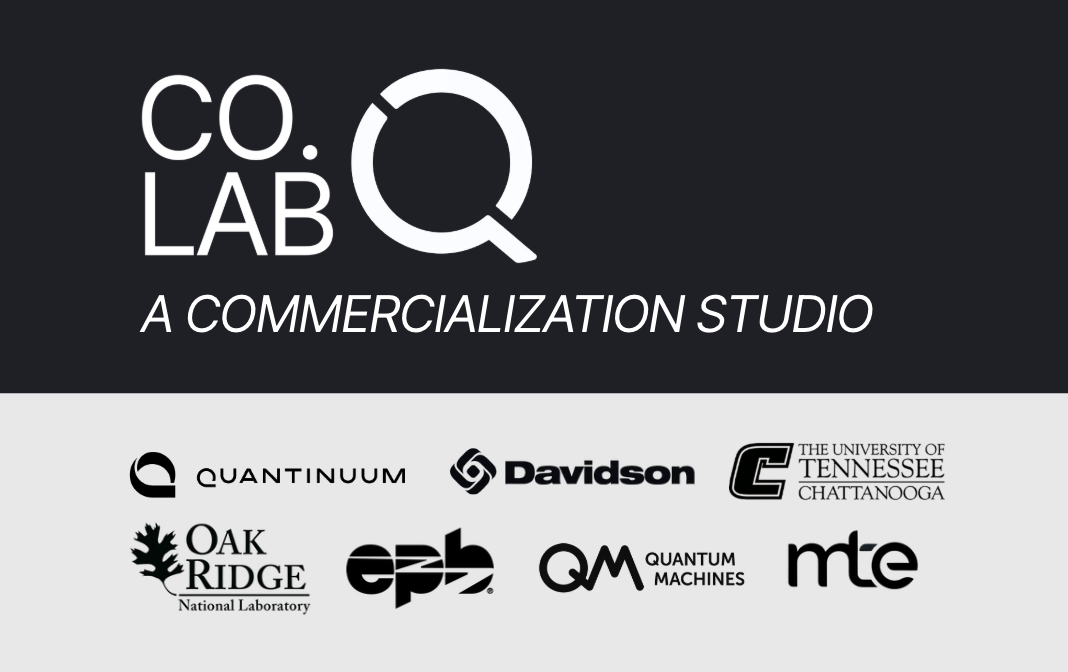
This month, Chattanooga’s CO.LAB launched a 12-month quantum commercialization studio, helping quantum companies “become customer validated, pilot-ready and investable,” with Chattanooga as the “living commercialization environment.” CO.LAB partnered with quantum computing company, Quantinuum, defense partner Davidson Technologies, EPB, Middle TN Electric, Quantum Machines, UTC, and Oak Ridge National Lab to bring forth this quantum commercialization pipeline. Applications are open on a rolling basis, and the first cohort will begin this November.
TN QuantumWorks Starts its Education Pilot
This month, TN QuantumWorks launched its K-12 curriculum pilot program across a small cohort of Hamilton County schools.
Pilot schools include:
- K-2: East Side Elementary, Lookout Mountain Elementary, Middle Valley Elementary
- Grades 3-5: Daisy Elementary, Calvin Donaldson Elementary, Wolftever Creek Elementary
- Grades 6-9: Soddy Daisy Middle School, Hunter Middle School, Red Bank Middle School, Signal Mountain Middle High School
- Grades 10-12: University High, Ooltewah High School, Tyner Academy
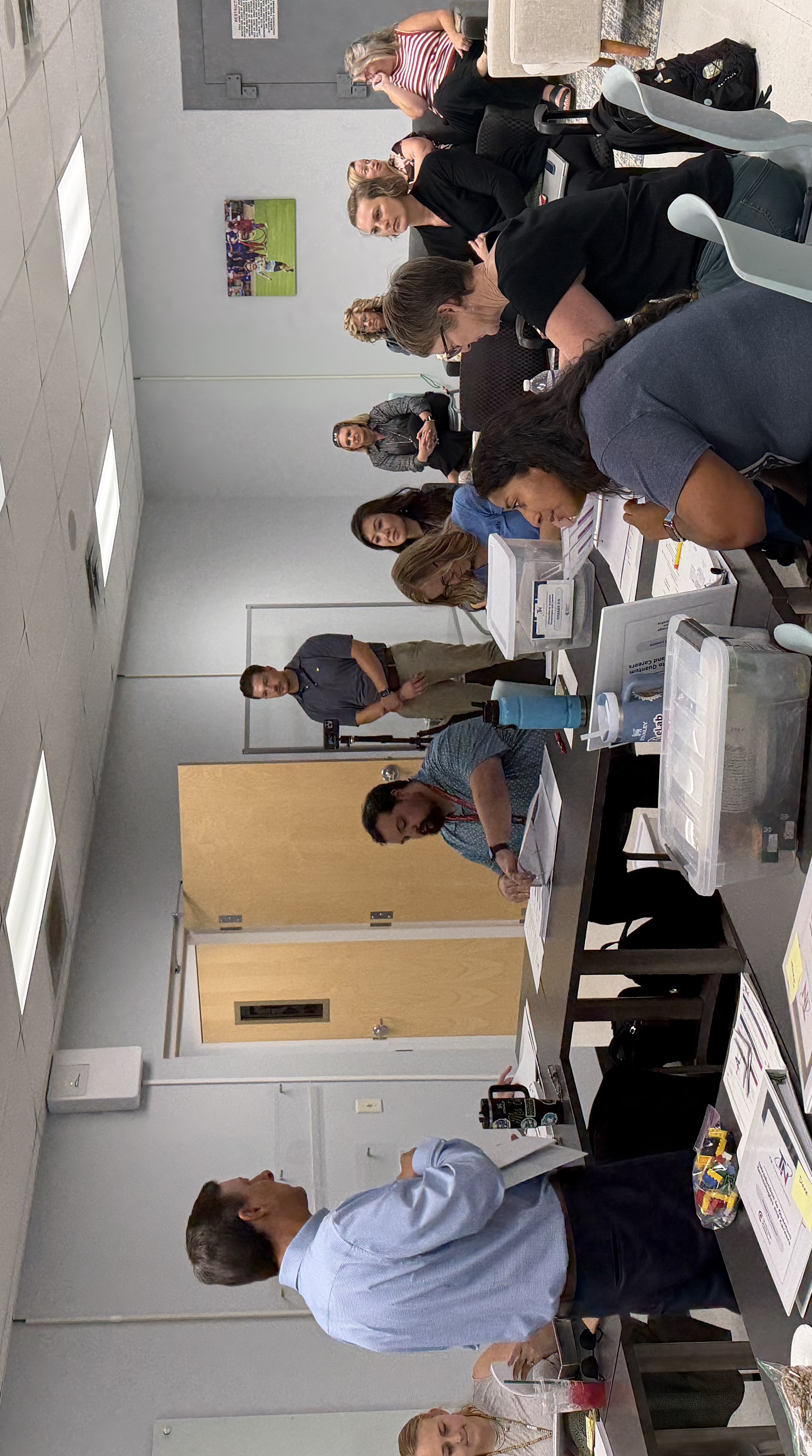
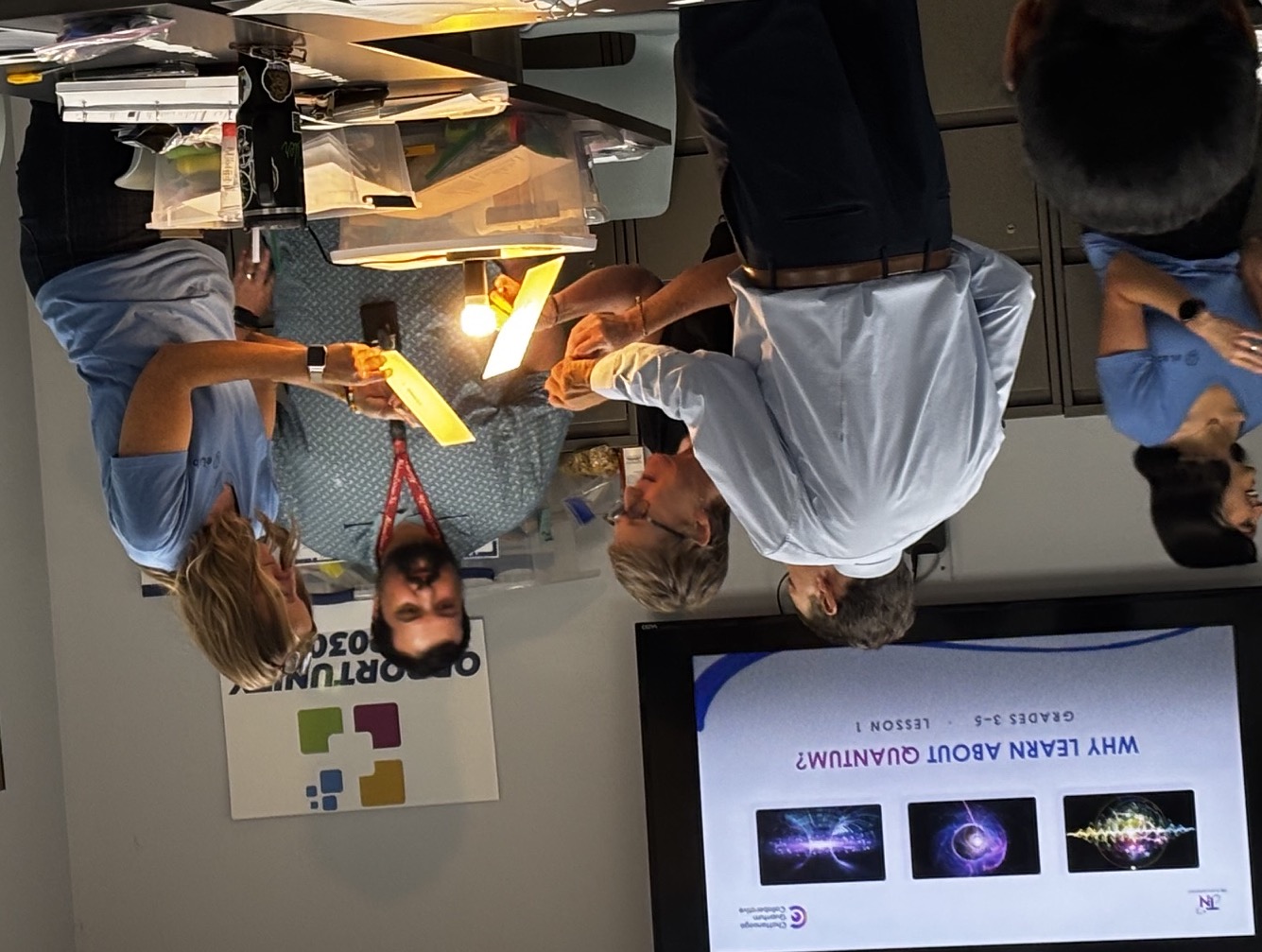
Teachers in the pilot cohort received professional development mid-September as well as hands-on activity kits to support classroom implementation. For example, middle school teachers received activity kits that let students use coins and pairing cards to model fundamental quantum concepts like superposition and entanglement. Meanwhile, high school students will have an opportunity to simulate quantum security and compare quantum hardware while exploring potential quantum careers. For four of the teachers in the pilot program, this will be their second time working with quantum technology, after they successfully participated in Sandia National Laboratories’ QCaMP, which CQC introduced to Chattanoogans this summer.
These initiatives further exemplify how Chattanooga and the state of Tennessee broadly continues to be a leader in the national quantum conversation. Read the full news release here.
The Chattanooga Quantum Ecosystem hosts the Japan-America Society of Tennessee (JAST)
Last month, UTC leadership hosted the JAST delegation, inviting city Mayor Tim Kelly, county Mayor Weston Wamp, representatives from state and federal policymakers, CQC, EPB, the Chattanooga Chamber of Commerce, among others, to explore research opportunities and further strengthen collaboration between the city of Chattanooga, the state of Tennessee, and the country of Japan. The group toured UTC’s Quantum Center Networking lab, as Quantum Center Director Rick Muckherjee discussed the potential of engaging on quantum-adjacent research with the delegation. In the words of Rick, “If you have problems in industry and want to see quantum’s impact, that’s the conversation we're interested in and it’s what sets us apart.”
CQC Hits the Road
CQC was all over this month, attending Quantum World Congress in Washington DC, speaking on panels in Toronto, and moderating briefings on Capitol Hill. Here’s a little snapshot of what we’ve been up to.
Washington, DC: Quantum World Congress (QWC) & CQC Heads to the Hill
Last week, quantum experts, policymakers, industry, academic, and ecosystem leaders convened in College Park, Maryland, for presentations and panel discussions highlighting the acceleration of quantum science and technological breakthroughs. The Chattanooga and broader Tennessee delegation showed up strong and participated in multiple panel discussions, with representatives from UTC, EPB, CO.LAB, MTSU, and ORNL speaking about quantum innovation and ecosystem growth in our state. Additionally, EPB hosted a very busy booth as participants from across the globe stopped by to learn more about the country’s first location with a commercially available quantum network and computer.
Ahead of QWC, CQC’s Charlie Brock was invited to Capitol Hill to co-moderate a roundtable discussion with various quantum stakeholders, including ecosystem leaders, industry, and academia. The audience included congressional, committee, and federal agency staffers, with the discussion focused on the four Core Challenges outlined in the Quantum Law Navigator report. These challenges include Workforce Development, Startup Support, Supply Chain, and protecting National Security while pushing forward on quantum innovation.
This comes as Congress continues to debate the reauthorization of the National Quantum Initiative Reauthorization Act, which, among other things, authorizes $2.7 billion in federal funding to advance quantum research and development. Tennessee Senator Marsha Blackburn (R) is a cosponsor of the legislation and has continued to champion quantum technology initiatives.
Toronto: Institute of Electrical and Electronic Engineers (IEEE) Quantum Week.
September 13 kicked off the seventh annual IEEE Quantum Week in Toronto. With more than 600 hours of programming, workshop, tutorials, and panels, participants from across the global quantum ecosystem convened to share insights, engage with each other, and understand the practical application of quantum.
CQC’s own Danna Bailey joined a panel, alongside panelists from all over the globe, highlighting CQC’s workforce development initiatives, including TN QuantumWorks, introducing K-12 students to quantum computing information and career pathways; QCaMP, a program training educators to introduce Quantum Information Science Technology (QIST) into classrooms; and the recently completed pre-apprenticeship program, where 18 industry sector participants completed a twelve-week program in which they were equipped with the tools to lead quantum technology adoption within their respective companies.
Participants will celebrate their accomplishments with a graduation next month, which we’ll recap in the next issue!
Jackson, TN: CQC, EPB, and UTC Collaborate Across the State
Last month, CQC joined EPB, the Greater Jackson Chamber, the Jackson Energy Authority, and the Tennessee Business Roundtable for the Jackson TN Quantum Roundtable. CQC’s CEO Charlie Brock moderated a discussion with EPB's Janet Rehberg and UTC Chancellor Lori Mann Bruce before opening up the floor for Q&A. It was a great opportunity to share our many initiatives in quantum technology with our friends and fellow Tennessee citizens in West TN.
The common theme in the Q&A session centered on their desire to participate in the quantum revolution that’s happening in Chattanooga and elevating Tennessee ahead of the national curve.
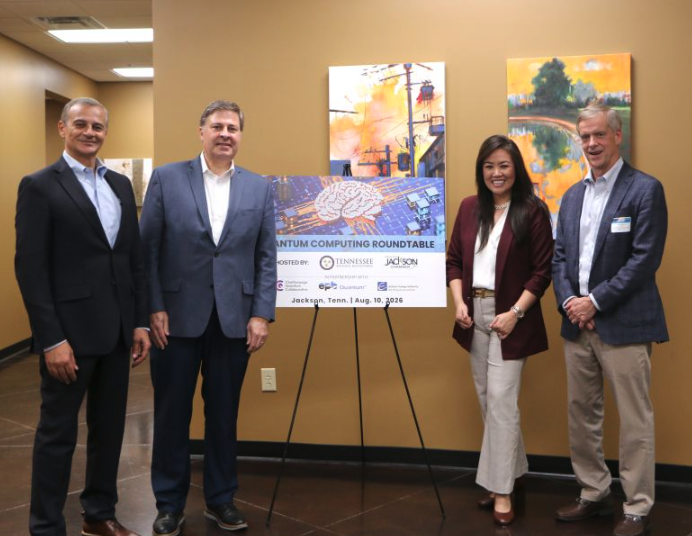
Thanks to our partners for hosting this important conversation, and to everyone from across West and Middle Tennessee who came out to learn more!
Looking ahead:
Next month, CQC will moderate a panel at QIB, speak at the state’s Governors Conference, and discuss workforce development at the Thrive Regional Partnership annual Tri-State Summit. We’ll recap it all for you in our next newsletter!
Policy Watch:
As quantum continues to move from from lab to market, state and federal legislators are paying attention. Here’s what’s going on:
Federal
Last month, the Department of Treasury launched the Quantum Readiness Task force. The Task Force is part of a directive that was issued under the Trump Administration’s Post Quantum Cryptography (PQC)-related executive order (EO) signed this summer. According to the Department of Treasury, the task force will bring together relevant stakeholders focusing on “coordinated preparation for quantum-related cyber risks” (e.g., strengthening operational resilience). Agencies are required to submit their own PQC migration plans by October 22.
Alongside the PQC EO, the Trump administration also issued a Quantum Innovation-related executive order, which, among other things, updates the U.S.’s national quantum strategy, including building a large-scale national quantum computer, and accelerating U.S. leadership in quantum information science and technology (QIST).
State
This month, the Tennessee Department of Economic Development launched its Quantum Utilization Buildout Infrastructure and Technology (QUBIT) grant program. The program allocates the $43 million authorized by the state legislator for quantum technology, to “support the physical and digital shared-used infrastructure and support network needed to connect Tennessee’s quantum assets and expand access to quantum technologies statewide.” Eligible applicants (e.g., higher education institutions, etc.) are invited to apply with a consortia of project partners including non-profit and for-profit institutions to submit proposals for advancing quantum initiatives statewide, such as regional quantum network expansion.
In addition to this most recent initiative, this summer the state announced $3 million in match funding for winning, National Science Foundations X-labs teams (a quantum-focused grant in which applicants were invited to submit proposals to think about strategic ways to expand the existing quantum ecosystem) based in the state who are establishing research, commercialization and business in Tennessee.
“Between Oak Ridge National Laboratory, EPB’s vast quantum network, leading research universities, and an ever-growing technology sector, Tennessee has the foundation to become a national hub for quantum innovation.”
- Deputy Governor and Commission Stuart McWhorter. (link)
And that’s a wrap!
It’s clear that as quantum interest continues to build, so are opportunities to become more involved with the technology. CQC is here to help the quantum curious educate, engage, and execute on their initiatives. We’ll see you next month, and in the meantime, reach out to us here if you’re interested in finding out more about quantum technology, becoming involved in CQC’s efforts as a member or sponsor, or have anything you’d like to see in this newsletter as well as general feedback.
See you soon!
More Quantum Connects
Quantum Connect September 2026
Quantum Connect August 2026
Building Readiness with Intention
CQC Quantum Connect - Q4 2025

CQC Quantum Connect - Q3 2025

CQC Quantum Connect - Q2 2025

Q1 2025 - CQC Quantum Connect