

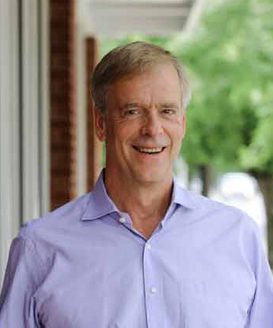
A Note from CQC CEO, Charlie Brock
Right now, there is more quantum activity happening in our region and our state than ever before. Partners from around the state are putting their heads together to develop the Tennessee Quantum Initiative strategic plan. Tech-adjacent professionals from multiple sectors are participating in a 12-week Quantum professional education program, a new K-12 quantum curriculum pilot has been announced, EPB and IonQ announced the Tennessee Quantum Communications Center, and the circle of connections and potential collaborators continues to widen.
And so much more is on the horizon! One event we’re especially looking forward to is an opportunity for business people around the region to start considering how quantum technology could benefit their organizations. Called Quantum in Business (QIB), this is EPB’s inaugural day of sharing the potential and possibility to business leaders in business terms.
It seems that every week brings a new announcement, partnership, program, or funding support that further elevates our region and state to become a leading quantum player in the country.
Thank you for being part of this work with us.
Charlie Brock
CQC CEO
Getting Down to Business
For business leaders trying to understand where quantum fits, EPB’s Quantum in Business conference (QIB) is being designed just for them.
The October 1 event in Chattanooga will focus on “what’s real, what’s relevant, and what’s next” in quantum, with sessions built around practical business questions: where quantum may create value, how companies can begin identifying use cases, what leaders should know about security and competitiveness, and how Tennessee is positioning itself for early industry adoption.
For companies that are curious about quantum but not sure where to begin, Quantum in Business is the place to be. Registration is free but space is limited so reserve your spot here.
News Around Town: IonQ and EPB Launch Tennessee Quantum Communications Center
Earlier this month, EPB and IonQ announced they would be partnering to establish the Tennessee Quantum Communications Center. Based in Chattanooga, the center will be the first quantum communication research and development innovation lab directly connected to a quantum network (EPB’s own commercially available quantum network).
The partnership builds on an existing collaboration between the two entities, including the forthcoming deployment of an IonQ Forte Enterprise quantum computer which will soon be available for commercial use (stay tuned!).
The facility will be funded by a $15 million five-year financial commitment from IonQ, which includes staffing the lab with IonQ scientists, while EPB will provide the network. Partners project that the center could positively impact the greater state economy by up to 2-3 times the $15 million investment, as well as support dozens of jobs.
Chattanooga Mayor Tim Kelly and Hamilton County Mayor Weston Wamp both applauded the deal as a significant milestone in positioning Chattanooga as a leader in quantum technology.
This is another step into building Chattanooga, and Tennessee’s robust, quantum ecosystem and continuing to generate resources and opportunities for our city.
Turning State Investment Into Shared Opportunity
Earlier this year we celebrated the announcement of a $43 million quantum investment from the state of Tennessee, and now we’re glad to be part of doing the work to turn that commitment into something Tennessee organizations and communities can use.
Through the Tennessee Quantum Initiative, partners from across the state (including CQC, UTC, ORNL, EPB, LaunchTN, Vanderbilt, other Tennessee universities, utilities including TVA, KUB and MTE and the Tennessee Department of Labor and Workforce Development, to name a few!) are working together to develop a plan for connecting state investment with real opportunity across Tennessee.
That work is now organized through five Tennessee Quantum Initiative subcommittees:
- Commercialization and Industry Adoption, focused on helping Tennessee companies understand, explore and eventually benefit from quantum technologies.
- Infrastructure, focused on the physical, technical and research assets needed to support quantum networking, computing and related technologies.
- Workforce Development, focused on the education and training pathways that can help students, educators and working professionals participate in the opportunities quantum may create.
- Governance, focused on how the statewide effort is organized, coordinated and sustained over time.
- National Security and Federal Alignment, focused on connecting Tennessee’s quantum capabilities with federal priorities in defense, cybersecurity, secure communications and critical infrastructure.
We'll keep you posted as this plan comes together and moves toward next steps.
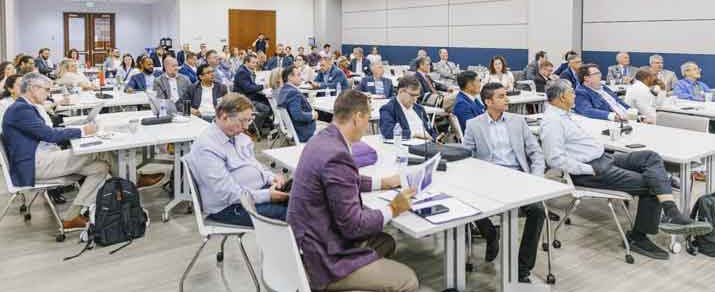
Quantum’s First Movers May Already Be on the Payroll
The companies that benefit early from quantum may be the ones that already have curious, capable people inside their organizations, and give them margin to explore how quantum technologies could benefit their industries.
That’s the thinking behind the nation’s first quantum pre-apprenticeship, launched by CQC with support from BuildWithin and funding from the National Science Foundation. The program is now underway with participants from 17 regional companies in sectors including banking, insurance, transportation and logistics, advanced manufacturing, healthcare, energy and others.
The goal of the program is to help professionals inside existing companies gain foundational quantum understanding while continuing in their full-time roles, so they can begin identifying possible use cases and helping their organizations take early, practical steps toward putting quantum to work.
McKinsey & Company estimates that existing companies could capture up to $2.7 trillion in value from quantum computing globally by 2035. The opportunity for Chattanooga and Tennessee is in helping local and regional companies capture some of that value. Preferably an outsized portion!
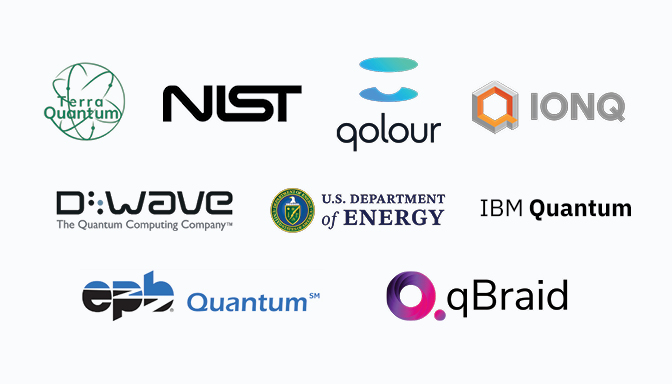
The curriculum is online and available for participants to engage when it is convenient for them and includes content from leading quantum organizations such as IBM, IonQ and NIST. Each Thursday, the cohort gets together via Zoom to hear from a different quantum-related guest speaker. So far,the cohort has heard from experts at Terra Quantum, qBraid, an ex-Google leader who is now a quantum entrepreneur, EPB, Qolour, and others.
The program will end with each participant completing a capstone project, identifying a challenge they face in their sector and proposing a possible quantum solution.
Three weeks in, participants were already sketching out capstone ideas, and we’re starting to speculate: will one of them walk back into their company with the idea that unlocks a piece of that $2.7 trillion? Start a new business? Build a product nobody has thought of yet?
We do not know exactly what happens after “graduation,” but we like the odds of this cohort doing remarkable things.
What If Quantum Starts in Kindergarten?
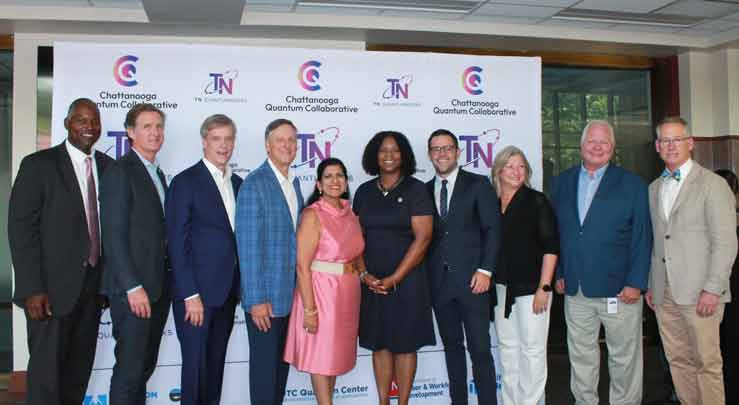
This summer, CQC launched TN QuantumWorks, a new K–12 quantum technology and career awareness initiative that will begin in Hamilton County Schools before expanding across the state.
That may sound early. But with emerging technologies, waiting until they arrive is usually too late.
No one expects a kindergartener to explain a qubit or a high school student to map out a quantum career on day one. But students should have a chance to understand that technologies like this are coming, that they may touch the fields they care about, and that there could be a place for them in the work ahead.
TN QuantumWorks curriculum is being developed by Dr. Dane and Sheila Boyington of Thinking Media, whose work in STEM, career readiness and workforce education has reached millions of students across the country. The initiative is supported by the Tennessee Department of Labor and Workforce Development and will be piloted in Hamilton County Schools, with UTC and EPB helping connect the work to higher education, research pathways and Chattanooga’s quantum infrastructure.
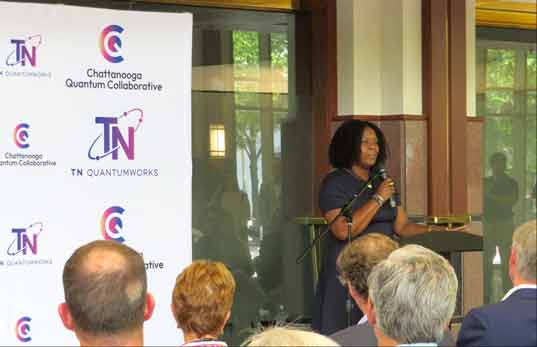
The curriculum is designed to meet students at different stages. Elementary students will explore quantum ideas through discovery and hands-on activities. Middle school students will begin engaging with concepts such as qubits and superposition. High school students will explore quantum applications, algorithms and careers, with opportunities for advanced students to write quantum programs and interact with real quantum computers thanks to EPB.
Now that TN QuantumWorks has officially launched, the next step is bringing the pilot into classrooms. We’ll share more soon about which schools will participate first, what students and teachers can expect, and how families, educators and partners can learn more about the program.
Boston, Tennessee?
What started as a speaking opportunity became two days of Tennessee-led quantum connection-building at the Quantum.Tech World conference in Boston.
UTC’s Rick Mukherjee and ORNL’s Shaun Gleason were invited to speak at the conference, giving Chattanooga a strong platform to share what is happening here. But a few good speaking slots are only the beginning if you use them well.
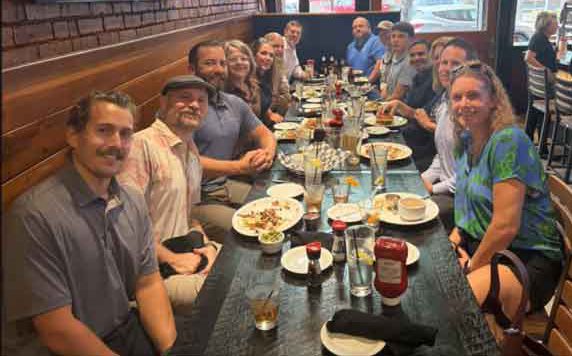
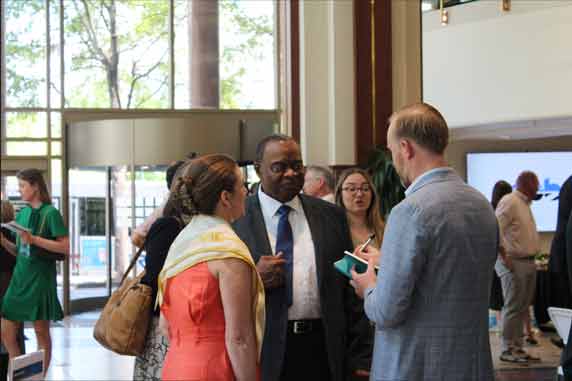
Around that opportunity, CQC led the charge to create visibility for Tennessee’s quantum ecosystem, beginning with hosting a Tennessee Quantum Welcome Reception that brought together leaders from legacy business, qum industry, investors and top government officials from across the country.
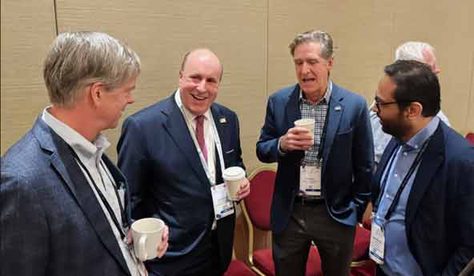
It wrapped with a CQC-hosted Tennessee Quantum Breakfast Roundtable that included senior officials from the U.S. Department of Commerce and the National Science Foundation. All told, more than 180 attendees at both events were able to network with the region and state’s quantum leaders.
Thanks to those who provided financial and other support that helped make these events so successful including LaunchTN, ORNL, UTC, The Chattanooga Area Chamber of Commerce and EPB. And to our friends at CO.LAB who pitched in with their superpowers for making connections!

Dane and Sheila Boyington on Careers, Curiosity and a Very Busy “Retirement”
When we spoke with Sheila and Dr. Dane Boyington, they were on the road to Atlanta to pick up a cousin visiting from India.
This is not unusual, as the Boyingtons are almost always in motion.

They talk the way people do when they have spent decades building a life and a company together: with shorthand, laughter, overlapping memories and the occasional finishing of each other’s sentences.
We talked with them about the work that has shaped their careers, what they have learned about helping students see new possibilities, and why their “retirement project” is anything but quiet.
What follows are highlights from our conversation, lightly edited for length and clarity.
You’ve spent much of your careers helping students connect classroom learning to real-world careers. What first pulled you into that work, and what has kept you there?
For Dane and Sheila, the work began with a practical workforce gap.
With chemical engineering backgrounds, they found themselves training chemical plant operators to do quality control work and realized many workers needed stronger reading and math skills to do the job. That led to adult workforce training, including a WorkKeys pilot in Chattanooga, and eventually to a national business with 28 state contracts that was later sold to ACT.
Then they started asking a different question: why were they waiting until adulthood?
They realized people are more willing to learn when they understand why the learning is useful. That idea has shaped several chapters of their work: helping people see opportunity before it feels out of reach.
Across Learning Blade®, KeyTrain®, Ready for Industry® and the other tools from Thinking Media you’ve built, what have you learned about what helps students see new possibilities for themselves?
Dane and Sheila saw that many students were not choosing STEM fields because they simply did not know what those careers looked like. So they created Learning Blade to help middle school students explore STEM and computer science careers at a stage when many young people are already forming ideas about what they can become.
Learning Blade was piloted in Hamilton County before growing far beyond Chattanooga, including work connected to former Arkansas Gov. Asa Hutchinson’s national computer science education initiative. As Sheila noted, Learning Blade found itself in conversations with some very large names in technology, including Microsoft, Apple, Google and “little old Learning Blade.”
You’ve built much of this work together as partners in life and business. What does each of you bring to the work?
Dane talked about Sheila. Sheila talked about Dane. Both were more comfortable praising the other than talking about themselves.
Sheila described Dane as brilliant, then quickly added the part that may be even more important for this work: he is one of the rare brilliant people she has known who can take very complicated material and make it understandable to regular people. “There’s no way we could have done what we did without meeting people where they are,” she said. “And Dane does that.”
When Dane talked about Sheila, he described her as the one who helped move ideas into the real world: relating to employees, communicating vision to customers and getting things in place. Her interpersonal and sales skills, he said, are what allowed their tools to reach schools across the nation. “She’s really responsible for making these things what they were,” he said. “And I’m very proud.”
You’ve called TN QuantumWorks™ your “retirement project,” which may be one of the more ambitious versions of retirement we’ve heard. Why does this project feel like the right one for this stage of your work?
For Dane and Sheila, the timing feels right for Chattanooga and Hamilton County.
Dane started reading deeply about quantum because he was frustrated by explanations that did not really explain how it worked. Sheila saw him digging in and recognized that this understanding should not be kept to themselves.
They also saw the community leaning in: mayors, Sen. Bo Watson, EPB, UTC and other partners showing genuine interest in what quantum could mean for Chattanooga and Tennessee. So they decided to lean in too.
What do you hope students take away from their first exposure to quantum concepts and careers?
More than anything, Dane and Sheila want students to feel excited about the future and confident that they may have a place in it.
They have seen earlier resources change the trajectory of students’ lives. Their feeling is simple: if this work changes the trajectory of even one student, it has done something worthwhile.
Eventually, Dane said, we may think about quantum computers the way we think about today’s computers: less as mysteries and more as tools. The opportunity now is to build a generation of people who know how to use, talk to and program those tools.
And for Dane and Sheila Boyington, that seems like exactly the kind of “retirement project” worth staying busy for.
Click here for more information on TN QuantumWorks.
Thirty-Six Hours, Real Energy Problems and Quantum Tools
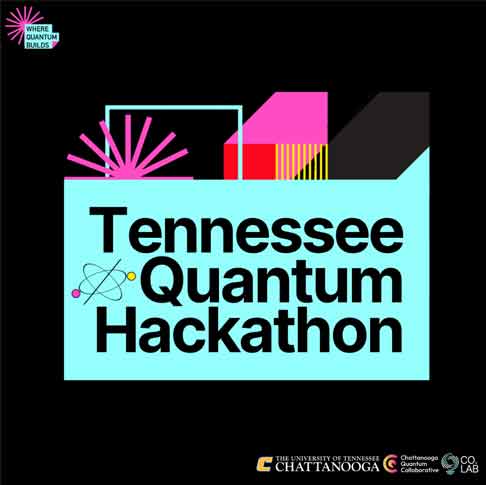
From November 13–15, students will get a chance to do something most people have not done yet: use quantum tools to think through real problems facing the energy sector.
The Tennessee Quantum Hackathon will bring together cross-functional teams for a weekend-long innovation event focused on challenge statements provided by energy partners such as TVA. A hackathon is a fast-paced problem-solving event where teams work intensively over a short period of time to develop and present ideas.
Over roughly 36 hours, participants will explore problem prompts tied to areas such as energy systems, grid resilience, cybersecurity, and quantum networking.
Participants will have access to qBraid, a cloud-based quantum computing platform used by researchers, developers and enterprises around the world. They’ll work in teams, receive support from mentors and experts, and develop solutions they can present to judges and industry partners.
In addition to onsite support, and before the 36-hour sprint begins, qBraid will lead a bootcamp-style training to help participants get familiar with the tools, concepts and problem-solving approach they will use during the hackathon.
The event is being organized by CQC, CO.LAB and UTC, and is funded through the National Science Foundation planning grant supporting Chattanooga’s quantum work. Additional partners supporting the work include IonQ (NYSE:IONQ), Oak Ridge National Laboratory, EPB, and Quantinuum (NASDAQ:QNT)
And did we mention there will be prizes? Cash prizes go to the first, second and third place teams to the tune of $2500, $1500 and $500 respectively.
Know a student who should be in the room? Encourage them to visit the Tennessee Quantum Hackathon website to learn more and apply. We are looking for people studying or practicing quantum science, math, business, marketing and other disciplines that help ideas move from promising technology to real-world use.
Stay Connected
Across Tennessee, quantum is moving! More people are getting involved, more ideas are being generated, and more opportunities are in front of us than ever before. Follow us on LinkedIn, Instagram and X to stay in the loop!
More Quantum Connects
Quantum Connect August 2026
Building Readiness with Intention
CQC Quantum Connect - Q4 2025

CQC Quantum Connect - Q3 2025

CQC Quantum Connect - Q2 2025

Q1 2025 - CQC Quantum Connect